Lithuania’s Military Supply Chain Revolution: From Soviet Legacy to NATO Powerhouse
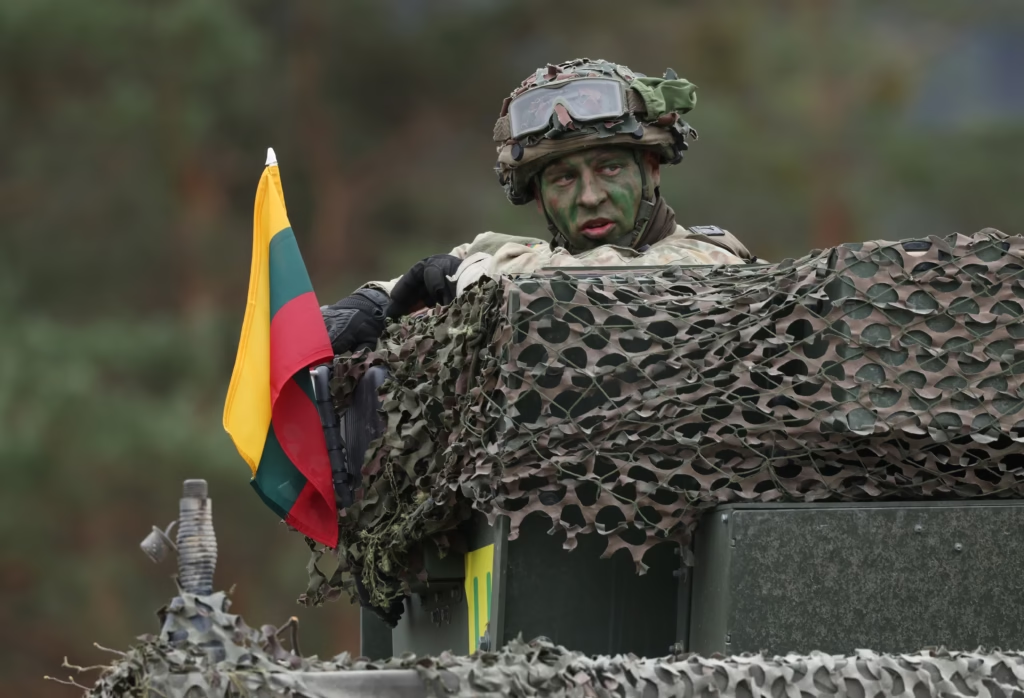
How a small Baltic nation transformed its defense capabilities and became a cornerstone of European security
Standing on the eastern edge of NATO, Lithuania has undergone one of the most remarkable military transformations in modern European history. What began as a post-Soviet state with outdated equipment and limited capabilities has evolved into a sophisticated defense powerhouse, fundamentally reshaping its military supply chain to meet 21st-century security challenges.
The story of Lithuania’s military supply chain evolution is more than just numbers and procurement contracts—it’s a tale of strategic vision, international cooperation, and the determination of a nation that refuses to be vulnerable again. As tensions with Russia have escalated since 2014, and particularly following the full-scale invasion of Ukraine in 2022, Lithuania has accelerated its military modernization at an unprecedented pace.
The Great Transformation: From Legacy Systems to Modern Warfare
Breaking Free from Soviet Dependencies
In the early 2000s, Lithuania’s military supply chain resembled a museum of Soviet-era equipment. Aging tanks, outdated communication systems, and limited ammunition supplies painted a concerning picture for a newly minted NATO member. The challenge wasn’t just replacing old equipment—it was completely reimagining how a modern military should be supplied, maintained, and equipped.
“We had to start from scratch,” recalls a senior Lithuanian defense official. “Our entire logistics framework was built around Soviet standards that no longer existed. We needed new suppliers, new maintenance protocols, new training programs—essentially, a complete military supply chain revolution.”
The transformation began slowly but gained momentum as geopolitical tensions increased. The 2008 Russian invasion of Georgia served as a wake-up call, but it was the 2014 annexation of Crimea that truly accelerated Lithuania’s military modernization efforts.
The Budget Revolution: Investing in Security
Lithuania’s defense budget has seen dramatic increases, rising to €2.3 billion in 2024 and projected to reach 3.03% of GDP—well above the NATO requirement of 2%. This financial commitment represents more than just numbers on a spreadsheet; it reflects a fundamental shift in national priorities and strategic thinking.
The budget increases have enabled Lithuania to pursue ambitious procurement programs that would have been impossible just a few years ago. Defense Minister Dovilė Šakalienė revealed that Lithuania has conducted $2 billion worth of business with American defense firms in the past three years and has identified a need for at least $8 billion more in coming years.
This massive investment is reshaping not just Lithuania’s military capabilities but its entire defense industrial base. The country is strategically positioning itself as a regional hub for military production and maintenance, attracting international defense contractors and fostering domestic innovation.
Building a Defense Industrial Base: The Rheinmetall Factor
International Partnerships Drive Local Production
One of the most significant developments in Lithuania’s supply chain transformation has been its success in attracting major defense contractors to establish local production facilities. In November 2024, Rheinmetall launched construction of a plant to produce 155mm artillery ammunition in Lithuania, with the €180 million investment creating around 150 local jobs and operations beginning in mid-2026.
This development represents more than just job creation—it’s a strategic move that enhances Lithuania’s defense autonomy while contributing to broader European security. The facility will produce critical ammunition that’s in high demand across NATO, particularly as the alliance supports Ukraine’s defense efforts.
The Rheinmetall investment exemplifies Lithuania’s new approach to military supply chains: rather than simply importing finished products, the country is building domestic production capabilities that create jobs, develop technical expertise, and reduce dependence on foreign suppliers during times of crisis.
Technology Transfer and Local Expertise
The establishment of foreign defense production facilities in Lithuania isn’t just about manufacturing—it’s about technology transfer and developing local expertise. These partnerships are creating a new generation of Lithuanian defense industry professionals who understand modern military technologies and can contribute to innovation and development.
Baltic Miltech Summit has become a crucial platform for fostering these relationships, bringing together international defense companies, local businesses, and research institutions. The summit emphasizes the importance of defense technology development through cooperation between business and science, creating an ecosystem that supports sustainable growth in Lithuania’s defense sector.
NATO Integration: Standardization and Interoperability
The German Brigade: A Supply Chain Game-Changer
Germany began deploying additional troops to Lithuania in April 2024, establishing a permanent German military base that will be fully operational with up to 5,000 personnel. This development has profound implications for Lithuania’s military supply chain, as it necessitates integration with German military logistics systems and standards.
The presence of a German brigade in Lithuania creates opportunities for shared procurement, joint maintenance facilities, and standardized supply chains. Lithuanian forces can benefit from German expertise in logistics management while German forces gain access to regional supply networks and strategic positioning.
Host Nation Support: Infrastructure and Integration
Lithuania will spend €1.1 billion on Host Nation Support between 2023-2027, including infrastructure development, training areas, equipment procurement, and service provision. This massive investment is creating modern military infrastructure that supports not just Lithuanian forces but the entire NATO presence in the region.
The Host Nation Support program represents a sophisticated approach to military supply chain management, ensuring that international forces stationed in Lithuania have access to the same high-quality logistics support they would receive at home. This includes everything from ammunition storage facilities to maintenance workshops and communication networks.
Comparative Analysis: Lithuania’s Military Supply Chain Evolution
| Aspect | Pre-2014 | 2024-Present |
|---|---|---|
| Defense Budget | <1.5% of GDP | 3.03% of GDP |
| Primary Suppliers | Limited, mostly Soviet legacy | Diversified: US, Germany, Nordic countries |
| Domestic Production | Minimal | Growing (Rheinmetall, local partnerships) |
| NATO Interoperability | Basic compliance | Full integration, standardized systems |
| Supply Chain Resilience | Single points of failure | Multiple suppliers, strategic reserves |
| Technology Level | Soviet-era systems | Cutting-edge NATO standards |
| Maintenance Capabilities | Limited, outsourced | Expanding domestic capabilities |
| Strategic Reserves | Minimal | Substantial ammunition and spare parts stockpiles |
Strategic Partnerships: Beyond Traditional Alliances
The American Connection
The relationship between Lithuania and American defense contractors has become increasingly sophisticated. Beyond simple procurement contracts, these partnerships involve technology sharing, training programs, and long-term strategic planning. American companies are not just selling products to Lithuania—they’re investing in the country’s long-term defense capabilities.
The depth of this relationship was evident when Defense Minister Šakalienė visited major American defense contractors, cementing relationships that extend far beyond traditional buyer-seller dynamics. These partnerships include provisions for local maintenance, training, and even co-development of specialized systems tailored to Lithuania’s specific needs.
Nordic Integration
Lithuania’s military supply chain transformation has also involved deepening ties with Nordic countries, particularly Sweden and Finland. These relationships are based on shared security concerns, similar operational environments, and complementary capabilities. The Nordic-Baltic cooperation framework has facilitated joint procurement programs, shared maintenance facilities, and coordinated training exercises.
Innovation and Future Technologies
Embracing Technological Advancement
Lithuania’s supply chain transformation isn’t just about replacing old equipment with new—it’s about leapfrogging to next-generation technologies. The country has invested heavily in communications systems, cyber defense capabilities, and precision-guided munitions that represent the cutting edge of military technology.
The emphasis on innovation extends to military logistics as well. Lithuania is implementing advanced inventory management systems, predictive maintenance programs, and automated supply chain optimization tools that many larger countries are still developing. This technological focus ensures that Lithuania’s military supply chain will remain effective and efficient as threats continue to evolve.
Cyber Security Integration
Modern military supply chains are increasingly dependent on digital systems, making cyber security a critical component of supply chain resilience. Lithuania has integrated cyber security considerations into every aspect of its military procurement and logistics operations, ensuring that supply chain vulnerabilities cannot be exploited by adversaries.
This comprehensive approach to cyber security includes secure communications networks for logistics coordination, encrypted inventory management systems, and robust backup procedures that ensure continued operations even under cyber attack.
Regional Impact: Lithuania as a Defense Hub
Supporting Ukraine: The Proving Ground
Lithuania’s transformed military supply chain has been tested in the most practical way possible—through its support for Ukraine’s defense against Russian aggression. Lithuanian military aid to Ukraine has reached nearly €80 million, including €35 million allocated to the Czech initiative for joint procurement of artillery ammunition.
This support has demonstrated the effectiveness of Lithuania’s new supply chain capabilities while providing valuable real-world experience in crisis logistics. The ability to rapidly provide meaningful military assistance to Ukraine shows that Lithuania’s supply chain transformation has achieved its primary objective: creating a robust, responsive defense logistics capability.
European Defense Integration
Lithuania’s supply chain evolution is contributing to broader European defense integration efforts. The country’s investments in ammunition production, maintenance facilities, and logistics infrastructure benefit not just Lithuania but the entire NATO alliance. This regional approach to defense planning ensures more efficient resource utilization and better overall security for all partners.
The success of Lithuania’s approach has attracted attention from other NATO members, particularly those in Eastern Europe who face similar security challenges. Lithuania’s experience provides a roadmap for other countries seeking to modernize their military supply chains while maintaining NATO interoperability.
Economic Impact: Defense Spending as Investment
Job Creation and Skills Development
Lithuania’s military supply chain transformation has created significant economic benefits beyond improved security. The defense sector is now a major employer, providing high-skilled jobs in manufacturing, maintenance, logistics, and technology development. These jobs often pay above-average wages and require advanced technical skills, contributing to overall economic development.
The Rheinmetall facility alone will create 150 direct jobs, with additional indirect employment in supporting industries. Similar patterns are emerging across Lithuania’s defense sector, creating a positive economic cycle that supports continued investment in military capabilities.
Technology Spillover Effects
Investment in military technologies often produces benefits for civilian industries, and Lithuania is positioning itself to maximize these spillover effects. The advanced manufacturing techniques, precision engineering capabilities, and logistics optimization systems developed for military applications have applications across many civilian industries.
This dual-use approach ensures that Lithuania’s military investments contribute to broader economic competitiveness while strengthening national security. The country is developing expertise in areas like advanced materials, precision manufacturing, and complex systems integration that will benefit many sectors of the economy.
Challenges and Solutions
Supply Chain Resilience
Modern military supply chains face numerous challenges, from geopolitical disruptions to cyber attacks to natural disasters. Lithuania has addressed these challenges through diversification, strategic stockpiling, and redundant supply routes. The country maintains relationships with multiple suppliers for critical items and has established strategic reserves that can sustain military operations during supply disruptions.
The COVID-19 pandemic provided valuable lessons about supply chain vulnerabilities, and Lithuania has incorporated these lessons into its military supply chain planning. The emphasis on domestic production capabilities, strategic reserves, and flexible logistics networks reflects a comprehensive approach to supply chain resilience.
Skills and Training
The rapid transformation of Lithuania’s military supply chain has created challenges in terms of personnel training and skills development. The country has addressed these challenges through comprehensive training programs, international exchanges, and partnerships with educational institutions. Military personnel receive training on new systems and technologies, while civilian contractors develop the specialized skills needed to support modern defense systems.
Future Outlook: Next-Generation Supply Chains
Artificial Intelligence and Automation
Lithuania is exploring the integration of artificial intelligence and automation technologies into its military supply chain operations. These technologies promise to improve efficiency, reduce costs, and enhance responsiveness while reducing the human resources required for routine logistics operations.
AI-powered inventory management systems can predict maintenance needs, optimize supply deliveries, and identify potential bottlenecks before they become problems. Automated warehousing and distribution systems can operate around the clock with minimal human supervision, ensuring that critical supplies are always available when needed.
Sustainable Defense
Environmental considerations are becoming increasingly important in defense planning, and Lithuania is incorporating sustainability principles into its supply chain transformation. This includes energy-efficient facilities, reduced packaging waste, optimized transportation routes, and environmentally friendly manufacturing processes.
The focus on sustainability isn’t just about environmental responsibility—it also contributes to operational effectiveness. Energy-efficient facilities reduce operational costs and vulnerability to power disruptions, while optimized transportation reduces fuel consumption and logistics complexity.
Frequently Asked Questions
Q: How has Lithuania’s defense budget increase affected military capabilities?
A: The dramatic increase in Lithuania’s defense budget—from less than 1.5% of GDP to over 3% in 2024—has enabled comprehensive modernization of military capabilities. This funding has supported major procurement programs, infrastructure development, and the establishment of domestic defense production facilities. The budget increase has transformed Lithuania from a country with minimal defense capabilities to a significant contributor to regional security.
Q: What role does domestic defense production play in Lithuania’s strategy?
A: Domestic defense production is crucial to Lithuania’s supply chain resilience and strategic autonomy. The Rheinmetall ammunition facility represents the beginning of a broader effort to establish local production capabilities for critical military supplies. This approach reduces dependence on foreign suppliers during crises while creating high-value jobs and developing technical expertise within Lithuania.
Q: How does NATO integration affect Lithuania’s military supply chain?
A: NATO integration requires standardization of equipment, procedures, and supply systems to ensure interoperability with allied forces. This has driven much of Lithuania’s military modernization, as the country has replaced Soviet-era systems with NATO-standard equipment. The presence of German forces in Lithuania creates additional opportunities for shared procurement and logistics cooperation.
Q: What lessons from Ukraine have influenced Lithuania’s supply chain planning?
A: The war in Ukraine has demonstrated the critical importance of ammunition stockpiles, supply chain resilience, and rapid logistics response capabilities. Lithuania has increased its strategic reserves, diversified its supplier base, and invested in domestic production capabilities to ensure continued operations during extended conflicts. The experience of supporting Ukraine has also provided valuable practical experience in crisis logistics.
Q: How does Lithuania balance cost considerations with security requirements?
A: Lithuania addresses this balance through strategic procurement planning, international cooperation, and emphasis on dual-use technologies that benefit both military and civilian sectors. The country participates in joint procurement programs with allies to achieve economies of scale while focusing investments on capabilities that provide the greatest security benefit per dollar spent.
Q: What cybersecurity measures protect Lithuania’s military supply chain?
A: Lithuania has integrated comprehensive cybersecurity measures throughout its military supply chain, including encrypted communications, secure inventory management systems, and robust backup procedures. The country recognizes that modern supply chains are heavily dependent on digital systems and has invested accordingly in protecting these critical vulnerabilities.
Q: How does Lithuania’s geographic location influence its supply chain strategy?
A: Lithuania’s position on NATO’s eastern flank creates both opportunities and challenges for military supply chain management. The country serves as a strategic logistics hub for the region while facing potential threats to supply routes during crises. This has driven investments in strategic reserves, multiple supply routes, and domestic production capabilities to ensure continued operations even under adverse conditions.
Q: What economic benefits has the military supply chain transformation created?
A: The transformation has created thousands of high-skilled jobs, attracted significant foreign investment, and developed technical capabilities that benefit civilian industries. The defense sector has become a major economic driver, with investments in advanced manufacturing, logistics, and technology development creating spillover benefits throughout the economy.
Conclusion: A Model for Modern Defense Transformation
Lithuania’s military supply chain transformation represents one of the most successful defense modernization efforts in recent European history. In less than a decade, the country has evolved from reliance on obsolete Soviet-era systems to operating one of the most sophisticated and resilient military supply chains in the Baltic region.
The key to Lithuania’s success has been its comprehensive approach to transformation. Rather than simply replacing old equipment with new, the country has built an integrated system that encompasses domestic production, international partnerships, strategic reserves, and cutting-edge technologies. This holistic approach ensures that Lithuania’s military capabilities will continue to evolve and improve over time.
The strategic vision behind Lithuania’s transformation extends beyond national defense to regional security and European integration. By positioning itself as a defense hub and contributing to allied capabilities, Lithuania has enhanced its own security while strengthening the entire NATO alliance. The country’s investments in domestic production and technological innovation create lasting economic benefits while reducing dependence on foreign suppliers.
Perhaps most importantly, Lithuania’s experience demonstrates that small countries can achieve remarkable defense transformations when they combine strategic vision with sustained investment and international cooperation. The country’s success provides a model for other nations facing similar security challenges and shows that modern threats require modern solutions.
As Lithuania continues to refine and expand its military supply chain capabilities, the country is well-positioned to meet future challenges while contributing to broader European security. The foundation built over the past decade provides a platform for continued innovation and growth, ensuring that Lithuania will remain a reliable ally and a significant contributor to regional stability.
The transformation of Lithuania’s military supply chain is more than a technical achievement—it’s a testament to the power of strategic thinking, international cooperation, and sustained commitment to security. As the geopolitical landscape continues to evolve, Lithuania’s experience offers valuable lessons for defense planners worldwide about building resilient, effective, and sustainable military capabilities in the 21st century.
For nations considering similar transformations, Lithuania’s experience demonstrates that success requires more than just increased spending—it demands strategic vision, international partnerships, and a commitment to building capabilities that serve both national and allied interests. The results speak for themselves: a small Baltic nation has become a cornerstone of European defense, proving that size is less important than strategy when it comes to national security in the modern world.
Leave a Reply
You must be logged in to post a comment.