Estonia’s Naval Procurement in 2025: Charting New Waters
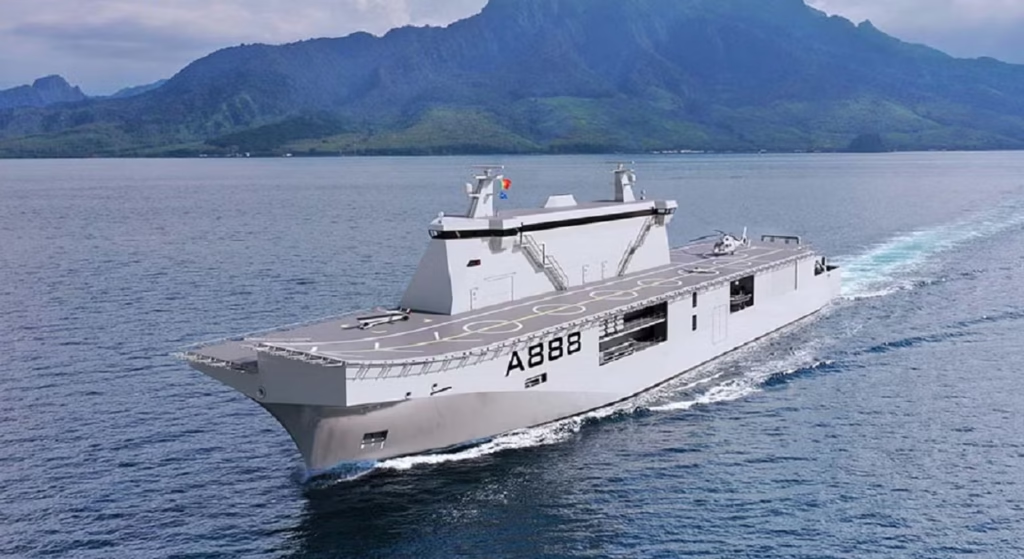
Imagine standing on the rocky shores of Tallinn, the Baltic Sea stretching out before you, its waves whispering tales of history and resilience. Estonia, a small nation with a big heart, has always relied on these waters—not just for trade and connection, but for security and survival. In 2025, Estonia’s navy, the Merevägi, is making waves of its own, embarking on an ambitious journey to modernize and expand its fleet. This isn’t just about new ships or shiny tech; it’s about a nation fortifying its defenses in a region where tensions simmer beneath the surface. Let’s dive into the story of Estonia’s naval procurement updates for 2025, exploring the why, what, and how of this pivotal moment in the country’s maritime history.
Why Estonia’s Navy Matters More Than Ever
Estonia’s coastline, the ninth longest among European NATO members, stretches along the Baltic Sea, a geopolitical hotspot where NATO and Russia keep a wary eye on each other. The Baltic has been dubbed a “NATO lake” since Sweden and Finland joined the alliance, but the presence of Russia’s “shadow fleet”—unregulated vessels dodging sanctions—has raised alarms. In April 2025, the Estonian navy detained the Kiwala, a Russia-bound oil tanker on the EU sanctions list, highlighting the real-world challenges the Merevägi faces Reuters. This incident underscores why Estonia is doubling down on its naval capabilities: to protect its waters, secure critical infrastructure like the Estlink 1 power cable, and counter hybrid threats.
The Merevägi isn’t just about defense; it’s a symbol of national pride. From its founding in 1918 to its reestablishment in 1993 after Soviet occupation, the navy has been a cornerstone of Estonia’s sovereignty. Today, with only eight commissioned ships and a displacement under 10,000 tonnes, it’s one of the smallest navies globally Wikipedia. Yet, its role in NATO’s Standing Mine Countermeasures Group 1 (SNMCMG1) and regional cooperation with Latvia and Lithuania proves that size isn’t everything. Estonia’s naval procurement in 2025 is about punching above its weight, ensuring it can handle everything from mine clearance to countering Russia’s shadowy maritime maneuvers.
A New Fleet on the Horizon
The 10-Year Plan: Building a Modern Navy
Estonia is crafting a bold 10-year naval development plan, set to be finalized in the second half of 2025, aiming to expand its fleet to 10–12 vessels by 2035. Commodore Ivo Vark, appointed Commander of the Estonian Navy in June 2024, is steering this vision. In an interview with Naval News, Vark outlined a two-pronged approach: three larger, 100-meter vessels for ocean patrol and nine smaller, 55–60-meter ships for coastal operations Naval News. These ships will be modular, capable of tasks like mine countermeasures, surveillance, and anti-ship warfare, reflecting Estonia’s need for versatility in a dynamic threat environment.
The plan isn’t just about numbers; it’s about strategic fit. Estonia’s geography—shallow waters, narrow straits, and proximity to Russia—demands ships that can operate in challenging conditions. The navy is also learning from the war in Ukraine, where rapid mobility and long-range precision have proven critical. This is why Estonia is prioritizing homegrown solutions, with Minister of Defense Hanno Pevkur emphasizing that new vessels should be built locally by companies like Baltic Workboats and BLRT ERR News.
Recent Acquisitions and Upgrades
Estonia’s naval procurement isn’t starting from scratch. In 2020, the navy welcomed two force protection vessels, Risto and Roland, built by Baltic Workboats. These ships, delivered in just eight months, are equipped for tasks like securing NATO vessels in port and supporting civilian crises Kaitseministeerium. The speed of this project showcased Estonia’s efficiency and boosted its shipbuilding industry, opening doors to international markets.
In 2021, Estonia signed contracts for naval mines and Blue Spear 5G SSM anti-ship missiles, enhancing its coastal defense. The Blue Spear, developed by Israel Aerospace Industries and ST Engineering, boasts a 290-kilometer range and GPS-independent navigation, making it a formidable deterrent Army Recognition. These acquisitions align with Estonia’s focus on mine countermeasures—a priority given the 80,000 sea mines laid in the Baltic during the World Wars, with over 1,200 cleared since 1995.
The EUROGUARD Project: Pioneering Autonomy
One of the most exciting developments is Estonia’s leadership in the EUROGUARD project, a €95 million European Defence Fund initiative to develop a 43–45-meter semi-autonomous surface vessel (USV). Launched in January 2024, the project involves 23 companies across 10 EU nations, with Baltic Workboats leading the charge. The prototype, set for sea trials by 2027, will feature remote control systems and capabilities like autonomous navigation and threat detection Naval Today. Commodore Vark sees EUROGUARD as a testbed for how far uncrewed systems can push naval warfare, potentially revolutionizing Estonia’s maritime strategy.
Challenges and Opportunities
Financial Hurdles
Estonia’s defense budget is robust for its size—5.4% of GDP in 2025, second only to Poland among NATO allies Breaking Defense. Yet, funding a naval expansion is no small feat. The €7.9 billion defense plan for 2025–2029 allocates €1.6 billion for ammunition alone, leaving the navy to compete for resources. Vark has acknowledged that not all ships will be replaced within the 10-year timeframe, but he’s pushing to secure funding for at least two new vessels soon. The postponement of replacing the Pikker vessel to 2029 highlights these financial constraints ERR News.
Regional Collaboration
Estonia isn’t going it alone. The Baltic states—Estonia, Latvia, and Lithuania—share training resources, like the Baltic Naval Communications School in Tallinn and the Diving Training Centre in Liepāja, Latvia. The Baltic Naval Squadron (BALTRON) fosters cooperation, with each nation contributing ships to NATO-led operations. Estonia’s leadership in EUROGUARD also strengthens ties with EU partners, ensuring interoperability and shared innovation.
The Russian Threat
Russia’s shadow fleet remains a persistent challenge. Incidents like the Kiwala detention and suspected sabotage of undersea cables have heightened Estonia’s vigilance. The navy’s ability to patrol the Gulf of Finland and protect critical infrastructure is non-negotiable. Investments in anti-ship missiles and naval mines are direct responses to these threats, aiming to deter Russia’s maritime provocations.
Comparison Table: Estonia’s Current vs. Planned Naval Fleet
| Aspect | Current Fleet (2025) | Planned Fleet (2035) |
|---|---|---|
| Number of Vessels | 8 (3 minehunters, 1 minelayer, 2 force protection vessels, 2 patrol vessels) | 10–12 (3 large ocean patrol vessels, 7–9 smaller coastal vessels) |
| Vessel Types | Minehunters (Sandown-class), force protection vessels, patrol vessels | Modular vessels for mine countermeasures, surveillance, anti-ship warfare |
| Key Capabilities | Mine clearance, force protection, limited coastal patrol | Ocean patrol, autonomous operations, advanced missile systems |
| Displacement | Under 10,000 tonnes | Likely increased, exact figures TBD |
| Primary Focus | Mine countermeasures, NATO exercises | Multi-role operations, regional deterrence |
| Example Vessels | EML Admiral Cowan, Risto, Roland | EUROGUARD USV, new 100m and 55–60m vessels |
This table illustrates Estonia’s shift from a specialized, small-scale navy to a more versatile and robust force, capable of addressing diverse threats while maintaining its NATO commitments.
Innovations on the Horizon
Uncrewed Systems and AI
Estonia is betting big on technology. The EUROGUARD project is just the start—smaller USVs like EUROMITE, developed by Sirentech Solutions, are being tested for intelligence, surveillance, and reconnaissance (ISR) roles. These prototypes, funded by the defense ministry in 2025, could redefine how Estonia patrols its waters. Meanwhile, the navy is integrating AI into its Maritime Integrated C31 System, enhancing situational awareness and decision-making Kaitseministeerium.
Local Shipbuilding
Building ships in Estonia isn’t just practical—it’s strategic. Companies like Baltic Workboats and BLRT are gaining global recognition, and local production ensures economic benefits and supply chain security. Minister Pevkur’s push for domestic shipbuilding aligns with Estonia’s tech-savvy ethos, fostering innovation and job creation.
Anti-Submarine Warfare (ASW)
While mine countermeasures remain a priority, Estonia is exploring ASW capabilities. The shallow Baltic waters pose unique challenges, but Vark has hinted at R&D projects to counter submarine threats, potentially through sensors or smaller USVs. This is a long-term goal, but it signals Estonia’s intent to stay ahead of evolving threats.
A Personal Reflection: Why This Matters
I remember visiting Tallinn a few years ago, standing by the Mine Harbor where the Merevägi is based. The sight of the EML Admiral Cowan, a modest minehunter named after a British officer who aided Estonia’s independence, was a reminder of how history shapes the present. Estonia’s navy isn’t just about ships; it’s about a nation that’s fought for its place in the world. The 2025 procurement updates feel like a continuation of that fight—a commitment to protect not just borders, but a way of life. For Estonians, the sea is both a lifeline and a frontline, and these investments reflect that duality.
FAQ: Your Questions About Estonia’s Naval Procurement Answered
Q: Why is Estonia investing so heavily in its navy despite its small size?
A: Estonia’s location on the Baltic Sea, near Russia, makes naval defense critical. The navy protects trade routes, undersea infrastructure, and counters hybrid threats like Russia’s shadow fleet. With NATO membership, Estonia also contributes to regional security, requiring a capable fleet.
Q: What types of ships are planned for the 2035 fleet?
A: The plan includes three 100-meter ocean patrol vessels for multi-role operations and 7–9 smaller 55–60-meter coastal vessels. These will be modular, supporting tasks like mine countermeasures, surveillance, and anti-ship warfare.
Q: How does the EUROGUARD project fit into Estonia’s strategy?
A: EUROGUARD is developing a semi-autonomous surface vessel for tasks like navigation and threat detection. It positions Estonia as a leader in naval innovation and enhances its ability to patrol efficiently with fewer crew.
Q: Can Estonia afford this naval expansion?
A: Estonia’s defense budget, at 5.4% of GDP, is among NATO’s highest. While funding is tight, the government prioritizes defense, with €7.9 billion allocated for 2025–2029. Local shipbuilding and EU partnerships help manage costs.
Q: How does Estonia’s navy collaborate with NATO and Baltic allies?
A: The Merevägi participates in NATO’s SNMCMG1 and BALTRON, sharing resources with Latvia and Lithuania. Joint exercises and projects like EUROGUARD ensure interoperability and collective defense.
Q: What role do naval mines and missiles play?
A: Naval mines and anti-ship missiles like the Blue Spear 5G SSM are key to Estonia’s coastal defense strategy, deterring threats and protecting critical infrastructure. Mines are especially vital given the Baltic’s history of mine warfare.
Conclusion: Navigating the Future
Estonia’s naval procurement in 2025 is more than a military upgrade—it’s a statement of resilience and ambition. From the EUROGUARD project’s cutting-edge autonomy to the strategic acquisition of missiles and mines, the Merevägi is transforming into a force that can protect Estonia’s shores and contribute to NATO’s mission. The challenges are real: financial constraints, regional tensions, and the complexities of modernizing a small navy. Yet, Estonia’s history of innovation and cooperation suggests it’s up to the task.
For readers interested in following this journey, keep an eye on updates from the Estonian Ministry of Defense or Naval News for the latest on the 10-year plan. If you’re in Estonia, consider attending events like NAVY TECH 2025 in Helsinki to see the region’s naval innovations firsthand Optics11. For policymakers or enthusiasts, engaging with Estonia’s defense community—whether through forums or research—can offer deeper insights into how small nations can make a big impact.
As the Baltic Sea continues to be a stage for geopolitical drama, Estonia’s navy is ready to play its part, not just as a defender, but as a pioneer. The waves may be rough, but Estonia is charting a course toward a stronger, smarter maritime future.
Leave a Reply
You must be logged in to post a comment.