Category: Uncategorized

  • Latvia’s Military Developing New Field Rations

    Latvia’s Military Developing New Field Rations

    Baltic Defence Review

    Latvia’s Military Developing New Field Rations

    Category: Uncategorized

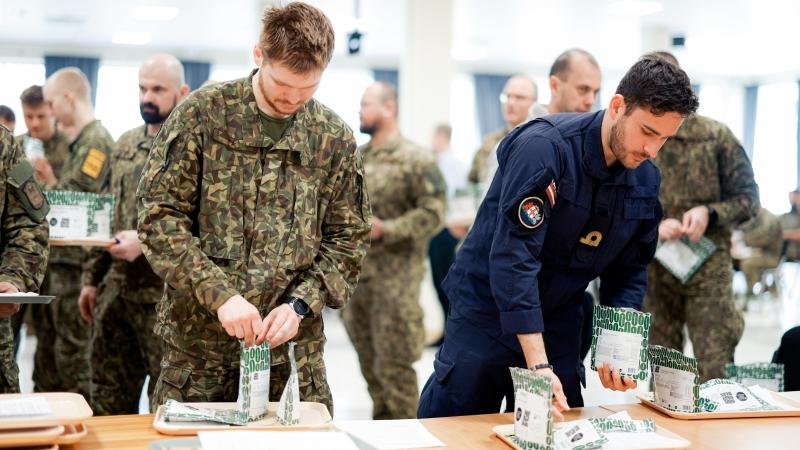
    On April 29th the Latvian military website Sargs.Lv reported that a ‘food tasting’ took place at the Latvian National Defence Academy for new National Armed Forces (NAF) rations. This saw the taste-testing and evaluation of lightweight, long-lasting and nutritious freeze-dried meals. 

    Sargs says that the new food prototypes were created in collaboration between the company “Roga Agro” and the Institute of Food of the Latvian University of Biosciences and Technology (LBTU). Activities are taking place within the framework of a grant supported by the Ministry of Defence.

    Brigadier General Kaspars Zdanovskis, Deputy Chief of the Joint Staff of the Latvian Armed Forces for Support Issues was quoted as saying:

    “We live in an era when war is happening right next door. Russia, as an aggressor, is destroying the Ukrainian population, infrastructure and our fellow soldiers every day…This is a time when we need to develop not only kinetic, but also support capabilities. And food is one of the three critical ones – along with ammunition and fuel,”

    Zdanovskis pointed out that the current dry rations used by Latvia’s armed forces is already of sufficient quality and taste, but one weak point remains: its expiration date.  It’s reported that the new freeze-dried meals have a potential shelf life of up to 8–10 years. 

    This would allow the NAF to build significantly larger stocks and improve its response capabilities in times of crisis.

    The current main meal, not dehydrated or freeze-dried, is the heaviest part of the package. While it’s edible right out of the package, it can be warmed up using a heat pack which is activated by chemical reaction that occurs when water is added – something fairly common with military field rations.

    Sandra Muižniece-Brasava, a professor at the Institute of Food Science at LBTU, stated:

    “We see this project as a success story – science and business working together to create practical and high-quality solutions,”

    She pointed out that the meals were developed with dual use in mind – both for military needs and the civilian market. 


    So what was presented at the April 29th tasting? Well, soldiers were offered 14 different meals, of which three were vegetarian. We couldn’t find a full list but our understanding is that these meals will be military-adaptations of the already-commercially-available products under the brand Good Mood Meals. 

    It was stated, however, that additional work is still planned for the military version – adapting it to have a higher calorie count and higher protein content. But it’s safe to say that meals found on the company’s website are more or less the types of meals soldiers can expect to eat in the field in the near future. 


    We already mentioned the expected advantages of these new rations: They are to be lighter weight than existing rations while ALSO having a longer shelf life. This is achieved in a process called Lyophilization (or sublimation) – which is more commonly known as freeze-drying. 

    The product is initially prepared as a complete meal, then frozen to -40°C. It’s then “lyophilized” in a vacuum and later dehydrated further to eliminate any residual moisture. It is said that this process retains up to 97% of nutrients. Aroma and texture is also said to be maintained throughout this preservation process.

    “This process preserves both the structure of the product, as well as the nuances of taste and valuable substances that we often lose during conventional heat treatment,”

    Sargs.LV says that, to prepare a freeze-dried meal, you need to open the package, remove the oxygen absorber, and then pour in the amount of hot water indicated on the package. Mix the meal thoroughly, close the package with a special closure and leave for 10-15 minutes. If hot water is not available, it is possible to use cold water, but in this case the taste quality may be lower. The meal would be safe to consume… but to fully enjoy the taste, it’s of course recommended to use hot water.


    Overall, it was reported that the mood was positive – and both the soldiers of the Land Forces Mechanized Infantry Brigade and the Navy acknowledged that the food was surprisingly tasty, with some even stating that it surpassed the previous rations! The only criticism mentioned was the practicality of quickly sourcing hot water in field conditions in the forest. 

  • Lithuanian Military Buys Two New Fast Attack Boats From Finland

    Lithuanian Military Buys Two New Fast Attack Boats From Finland

    Baltic Defence Review

    Lithuanian Military Buys Two New Fast Attack Boats From Finland

    Category: Uncategorized

    On April 7th, 2025, Lithuania’s Defence Resources Agency under the Ministry of National Defence, together with the Latvian Ministry of Defence, announced that it had signed a contract with Finnish company Marine Alutech for the purchase of multi-purpose attack boats. The value of the contract for the Lithuanian side is €22 million.


    The Lithuanian ministry of defence says that this contract is the second step after the technical agreement was signed in 2024 between Latvia, Lithuania and Finland. Under this contract, Lithuania will acquire two advanced fast multi-role attack boats, which will be equipped with the SPIKE NLOS missile launch system and a remote heavy machine gun control system.

    The specific model being purchased was not specified, and it sounds like there will be some development taking place. However, the photo attached to Lithuania’s press release is the Watercat M18 AMC COMBAT SUPPORT SERVICE VESSEL. Other sources say that the future boats will be based on the M18.

    The Watercat M18 is already in operation with the Finnish Navy, which has 12 of these vessels. These are powered by two 660 kW Scania diesel engines and feature Rolls-Royce waterjet propulsion. Interestingly, it looks like Lithuania’s Ministry of Defence took the image from Marine Alutech, photoshopped out trees in the background, as well as the Finnish flag. The SPIKE NLOS was also added to the back – a missile launch system from Rafael Advanced Defence Systems.

    It looks like this deal has been in the works for quite some time. Back in June 2022, a letter of intent was signed with Finland on the acquisition of two patrol craft.

    The defence minister at the time stated:

    “Finland understands the necessity of such craft to Lithuania, so the negotiations are going really fast. We are planning the sale-purchase contract to be concluded still this month. The patrol boats would complement the efforts to enhance an all-round defence, fill in the gap of Lithuanian Navy capabilities in the Curonian Lagoon and would build up Lithuania’s coastal surveillance.”

    Source: LT Ministry of Defence

    And so, with this quote taking place almost 3 years ago, it would appear that something delayed Lithuania’s plans…


    In the recent official press release, Lithuanian Minister of National Defense Dovilė Šakalienė was quoted as saying: 

    “These new multi-purpose attack boats will significantly strengthen our Naval Forces and ensure a faster response to security challenges in the waters of our region. In addition, this contract is an excellent example of how small countries, by cooperating, can build a stronger and more effective defense, ensuring stability and security in the entire Baltic region,” 

    These boats will contribute to preventing threats from the Gulf of Finland to the Curonian Lagoon. Due to their special design and propulsion system, the boats will be able to navigate in extremely shallow waters and will allow them to quickly respond to various threats both on water and on land.

    The acquisition of the boats for the Lithuanian Navy will contribute to the strengthening of local industrial sectors through industrial cooperation in both Lithuania and Latvia. 


    We know that Lithuania has ordered 2 for €22 million. However, Latvia has yet to commit to any sort of purchase. The Latvian Ministry of Defense has only signed an agreement to join the initial development phase as part of the cooperation. After its development, the results will be evaluated, and a separate decision of the Latvian Ministry of Defense will be made on the production and purchase of a prototype of the platform.


    As the boat is still being developed, there’s not too much else to say with this news. However, we can tell you the SPIKE NLOS (which stands for Non-Line-of-Sight) is a multi-purpose, electro-optical/infrared missile system with the ability to reach ranges up to 32 kilometers. The Israeli-built system comes from Rafael Advanced Defense Systems, although the company has teamed up with Lockheed Martin to offer the weapon system to U.S. customers. 

    Lithuania’s forces already have a relationship with Rafael and are already familiar with Spike as an anti-tank guided missile system. This system has been installed on Lithuania’s Vilkas Infantry Fighting Vehicles.

  • Finland’s Patria Will Assemble ASCOD IFVs For Latvia, In Latvia!

    Finland’s Patria Will Assemble ASCOD IFVs For Latvia, In Latvia!

    Baltic Defence Review

    Finland’s Patria Will Assemble ASCOD IFVs For Latvia, In Latvia!

    Category: Uncategorized

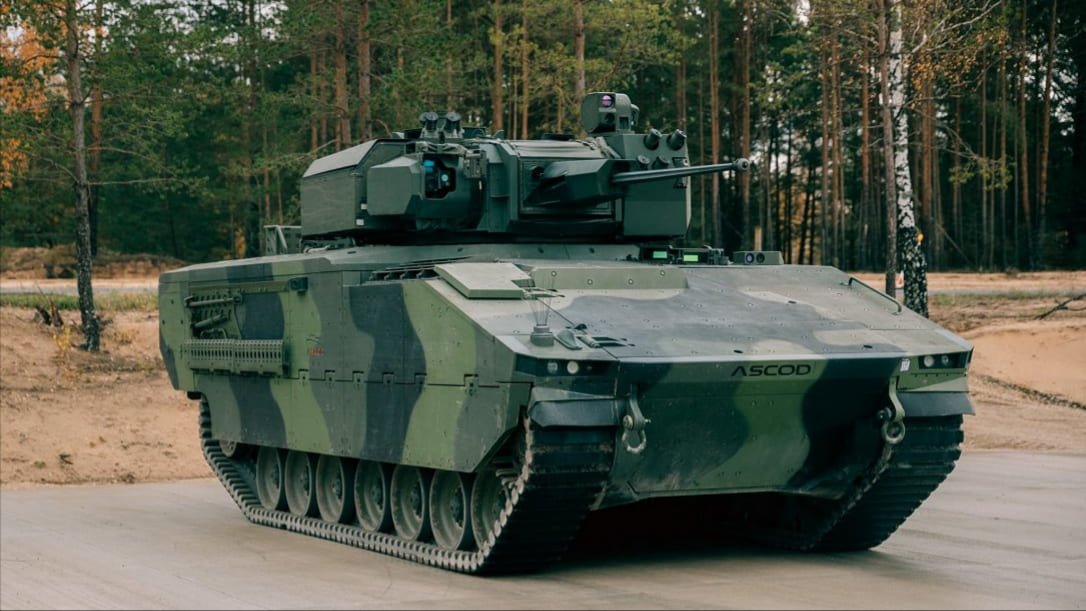
    Some pretty eyebrow-raising news coming out recently regarding Latvia’s future IFV – the one based on the ASCOD platform from General Dynamics European Land Systems. Announced on May 30th, 2025, Finland’s Patria and General Dynamics European Land Systems (GDELS) will be entering into a strategic collaboration to assemble and maintain ASCOD Infantry Fighting Vehicles (IFVs) at the Defence Partnership Latvia (DPL) facility in Valmiera, Latvia.


    The news came out on the fifth anniversary of Patria’s operations in Latvia and the first anniversary of the Defence Partnership Latvia (DPL) armoured vehicle production facility in Valmiera. Up until this point, it was unclear where the vehicles would be built. You may recall that, on January 30th, 2025, The Ministry of Defense of the Republic of Latvia awarded General Dynamics a contract for the delivery of an initial batch of 42 ASCOD Infantry Fighting Vehicles (IFV) including logistic support. 

    The acquisition decision followed an international competition with extensive functional trials by the Latvian National Armed Forces. The initial contract is stated to have a value of approximately €373M.


    As stated by Patria, the ASCOD IFVs will feature NATO-standard Level 4 armour, automatic cannons, anti-tank weapon systems, machine guns, and advanced battlefield technology, providing enhanced situational awareness for troops. 

    At the same time, the specific cannon, anti-tank systems, etc, have yet to be disclosed.

    Patria adds that each vehicle will be operated by a three-person crew and can transport and deploy six fully equipped soldiers. Uģis Romanovs, Chairman of the Board at Patria Latvia and Defence Partnership Latvia, was quoted as saying:

    “Our experience with the production of 6×6 armoured vehicles, combined with the transfer of technology and expertise from Patria, demonstrates our ability to handle complex and precise military vehicle manufacturing, assembly, and maintenance tasks…We are excited to begin this collaboration with Patria, a company that has proven its technological capabilities in managing complex defence industry solutions.”

    It should be made clear that the Valmiera facility will be the assembly site for the future IFVs. Thus, we don’t yet know where various ASCOD components will be produced. Nonetheless, the move will contribute significantly to the growth of the local defence industry, while also supporting the broader Latvian economy.

    The procurement process for these vehicles actually began in early 2023. This was followed by functional testing of various platforms later that same year.  Following these tests, the National Armed Forces carried out a detailed evaluation, considering operational needs, cost, available equipment, local industry involvement, delivery schedules, and other key factors.

    On the topic of delivery schedules, the first production units are expected in June 2026 and the first ASCOD IFVs are expected to be operational by autumn 2026.

    It seems an odd situation – one Finnish defence firm partnering with the Spanish-headquartered offshoot of an American defense giant to produce IFVs in Latvia. But since Patria doesn’t have any tracked platforms to compete with General Dynamics Europe, there’s less of a conflict of interest. Ultimately, it simply appears to be a win-win-win situation where Latvia gets its vehicles produced faster in an already-built facility while Patria and General Dynamics benefit from revenue earned in the process. 

  • A Modern History Of Pistols In Lithuania’s Land Forces

    A Modern History Of Pistols In Lithuania’s Land Forces

    Baltic Defence Review

    A Modern History Of Pistols In Lithuania’s Land Forces

    Category: Uncategorized

    Take a look at new and old photos of Lithuania’s armed forces, and you’ll see quite a diversity of equipment. Of course, it’s not unique to Lithuania, as any military will change its equipment over time. However, Lithuania, as well as the other Baltic countries, have had their arsenals not only change because of technological improvements, but because of their regained independence from the Soviet Union and the broad shift towards western weapons.

    The TT-33

    This aritcle’s focus is on pistols used by Lithuania’s forces.


    Post-Soviet Pistols (1990s to 2000s)

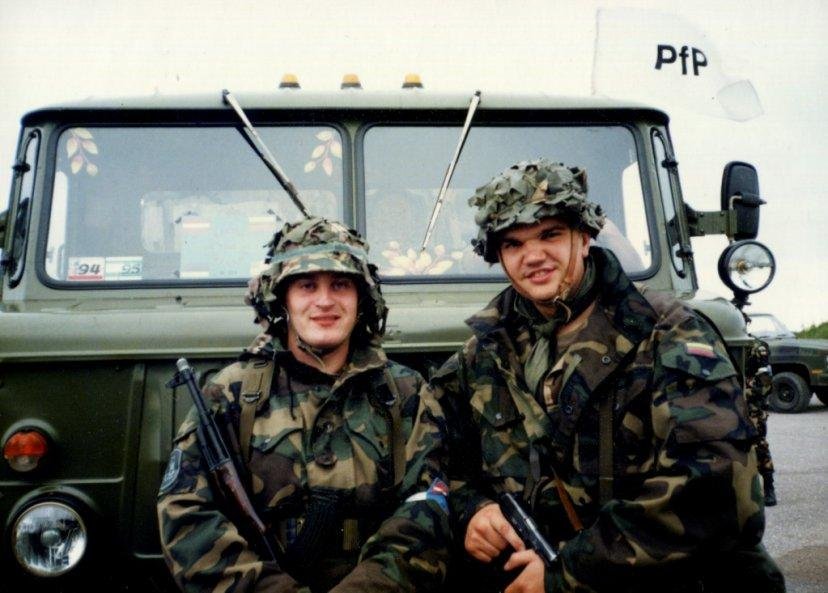
    When it comes to pistols, the post-Soviet Lithuanian military was armed with two types:

    • The Soviet Tokarev TT-33: A 7.62×25mm, short recoil, semi-automatic
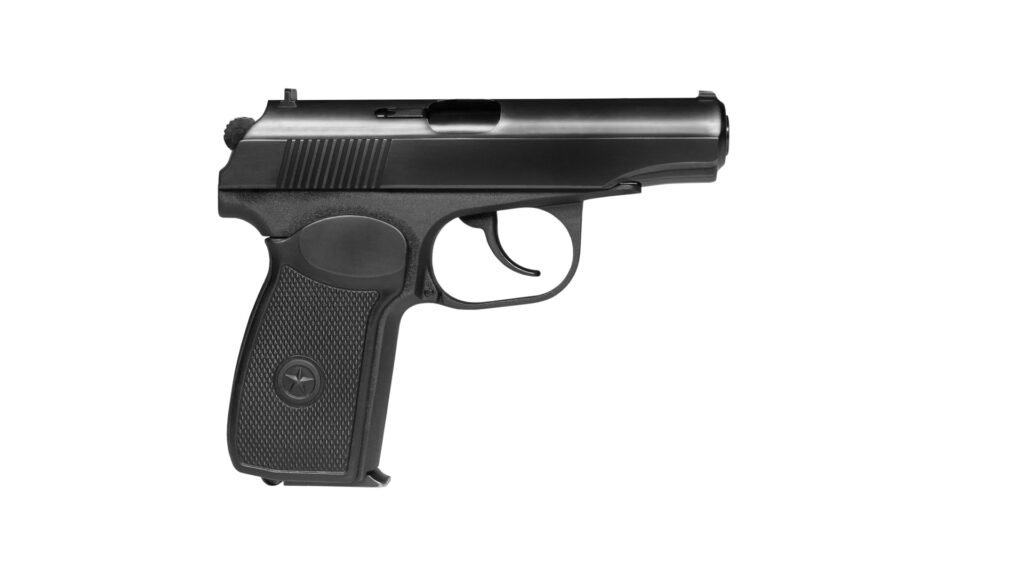
    • Makarov PM: A 9×18mm semi-automatic blowback

    The Tokarevs were used until around 2004 and then phased out and mostly sold as surplus after more modern options became available. The Makarovs were also used until around 2004 and many were transferred to law enforcement and later sold as surplus.

    The Makaorv PM | Source: Kalashnikov Group

    Moving towards NATO (early 2000s)

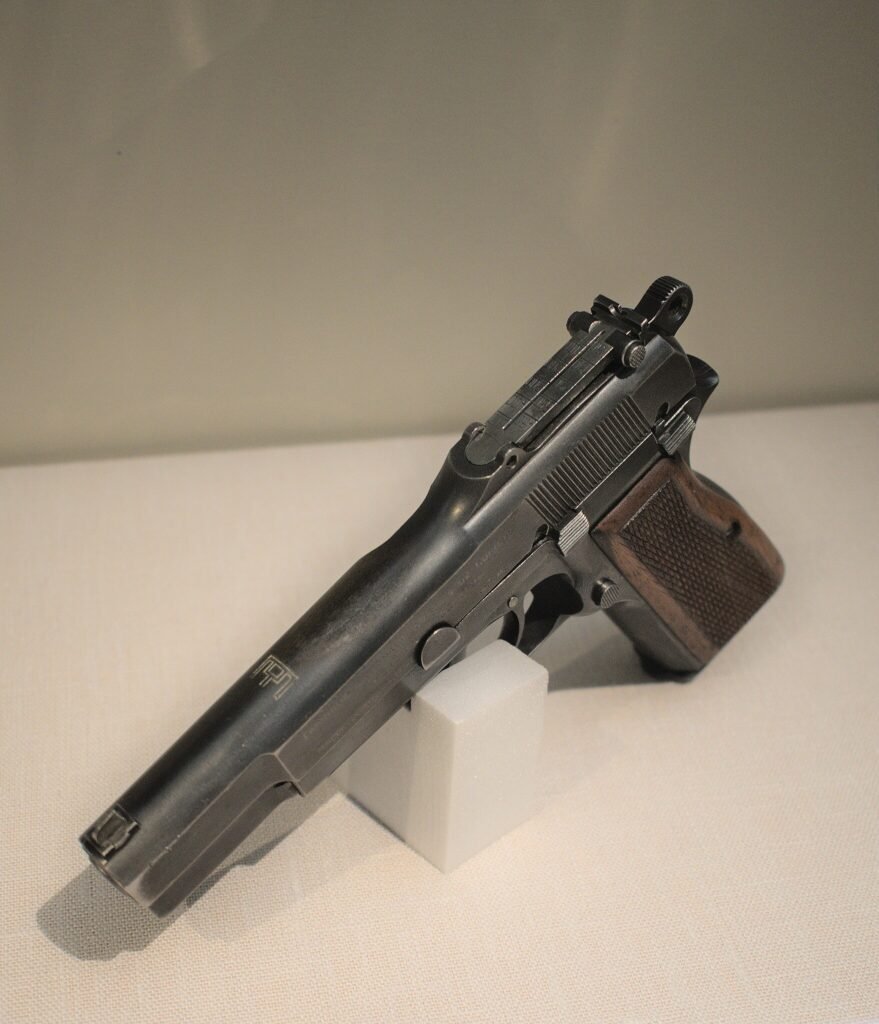
    Due to Lithuania regaining its independence, western nations were generous enough to help rebuild its military. This is a common theme across many types of weapons and all three Baltic nations. And so the first non-Soviet pistol used by Lithuania’s armed forces was ​​the Browning Hi-Power – a 9×19mm, short recoil, semi-automatic. Acquired from Belgium, these were second-hand military surplus donations that were used until the early 2000s.

    The Browning Hi-Power | Source: Ke an via Wikimedia Commons

    Throughout this same period, we know that the military also used the Czech ČZ-75. These were procured in small numbers to meet the need of having NATO-compatible handguns. As Lithuania grew its post-Soviet economy and moved closer towards NATO membership, it proceeded to purchase weapons that used NATO-standard ammunition. 

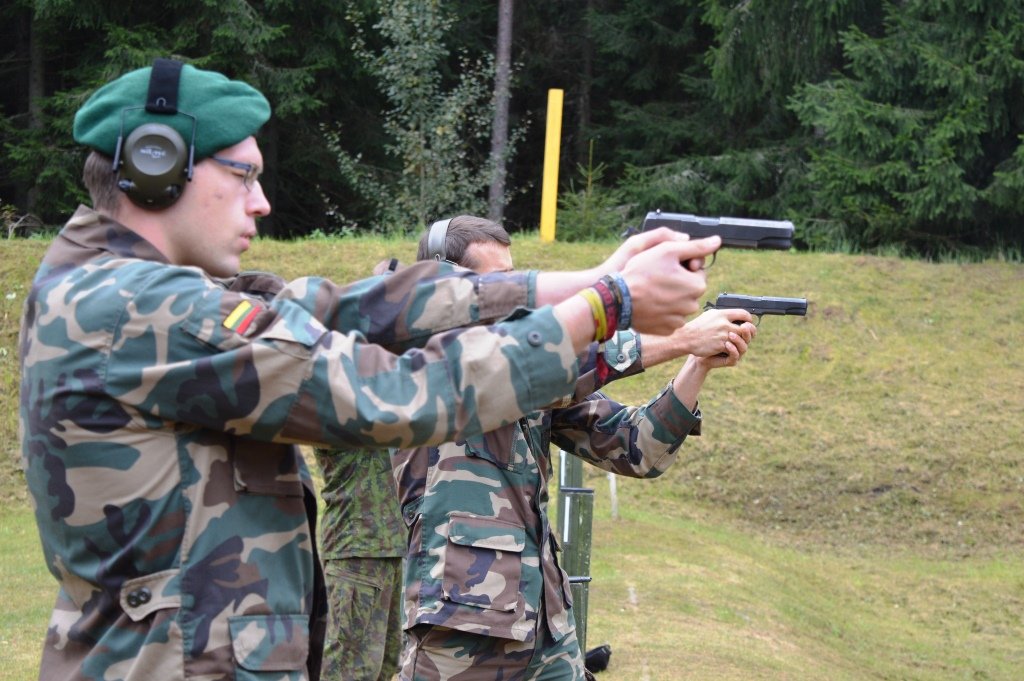
    The Colt M1911A1, a .45 ACP, short-recoil, semi-automatic was used throughout the 2000s and 2010s. This pistol was actually Lithuania’s first NATO-compatible pistol, acquired alongside the M14 rifle. Since around 2020, it has been phased out of the regular forces and transferred to reserves.

    Members of the Lithuanian Riflemans’ Union using the M1911. Source: KAM

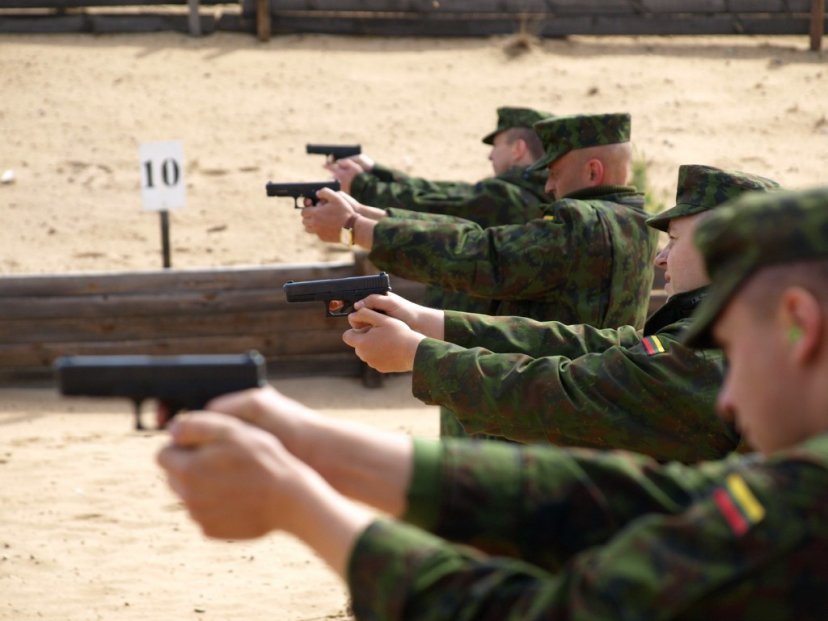
    Also during the 2000s, the Lithuanian military purchased the Austrian Glock 17 – a 9x19mm short-recoil semi-automatic. The pistol was a further attempt to standardize modern 9mm pistols across all units. 

    The Glock 17 Source: KAM

    This sidearm is slowly being phased out by our final pistol type: The Heckler & Koch SFP9. These first appeared in Lithuania’s forces in the 2010s, and are replacing the Glock 17 as standard service pistol.

    A new standard (2020 and beyond)

    A 2020 press release by the Lithuanian ministry of defence stated:

    “In order to achieve new quality in the Lithuanian Armed Forces and ensure provision of modern soldier equipment, the Lithuanian Ministry of National Defence has concluded an agreement with the German company Heckler & Koch and will provide its troops with pistols SFP9 SF Paddle. These pistols were chosen as the ones that best meet the needs of the Lithuanian Armed Forces.”

    The ministry said that the decision to purchase new pistols for Lithuanian troops was made in order to abandon using different calibre pistols and change over to the use of uniform calibre 9×19 mm pistol ammunition, leaving still usable ones for reserve and replacing weapons that are running out of resources.

    SFP9 Source: KAM

    The value of the concluded agreement was said to total about 1.57 million euros, providing for the possibility of purchasing additional pistols if necessary. It also includes training of personnel to operate the newly acquired weapons.

    The SF P9 was selected from models of thirteen manufacturers as the most suitable for the needs of the Lithuanian Armed Forces. 

    It was said that the process of selecting a pistol model included test firing in various conditions – different types of shooting ranges, in the tactical field, and intervention building.

    We also know that in late 2020, a Lithuanian Science and technology magazine published several articles highlighting reasons behind the HK pistol being selected instead of a weapon from Glock.

    A representative of Lithuanian Defense Resource Agency was quoted as saying:

     “Out of 13 models that participated, Glock was one of the participants, but did not submit model 17 for the testing”.

    After being asked about the cost, the official stated: “with Glock’s Generation 5 models the prices aren’t that far apart from H&K, the German entry had stellar performance in adverse conditions as well as superior ergonomics” noting ambidextrous controls as being one of the key advantages.

  • Lithuanian Navy Gets Its First Brand New Boat

    Lithuanian Navy Gets Its First Brand New Boat

    Baltic Defence Review

    Lithuanian Navy Gets Its First Brand New Boat

    Category: Uncategorized

    Since regaining independence from the Soviet Union in the early 1990s, much of its military equipment has come used, from other nations. Having to rebuild its economy and transition away from Soviet structures, there was indeed very little money to go around – and so the small Baltic nation has had to rely on donations and the purchase of pre-owned equipment – including ships for its Navy.

    But, for the first time since regaining independence, Lithuania has taken delivery of a brand new ship. 


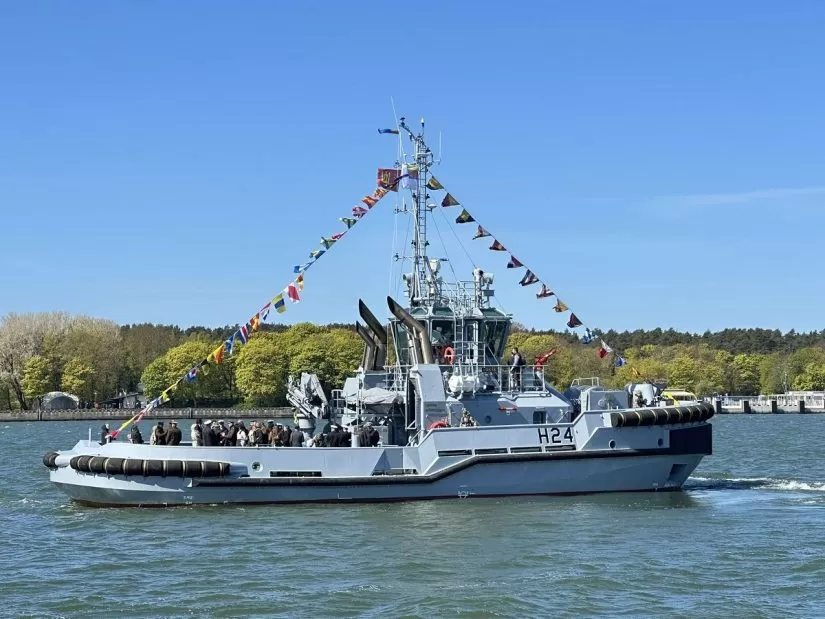
    On May 12th, the inauguration and christening ceremony of the new tugboat H-24 took place at the Klaipėda Cruise Ship Terminal. The brand new port tugboat, built by the Dutch company DAMEN is based on the ASD 3010 class project.

    This boat has been christened “Lokys” – which means ‘bear’ in Lithuanian.

    Deputy Minister of National Defence Karolis Aleksa had THIS to say during the ceremony:

    “The geographical location of the Klaipėda Seaport and its importance to both economic and our national security interests is enormous, therefore we must devote the necessary attention and resources to the Lithuanian Navy. We clearly see and understand the threats, therefore we are developing and will continue to develop maritime capabilities, and the brand new H24 port tug is just one example,” 

    DAMEN tugboat H24 for Lithuanian Navy
    Source: KAM

    Commander of the Navy, Flotilla Admiral Giedrius Premeneckas, stated:

    “For the first time in the history of independent Lithuania, the Navy has received a completely new ship. This ship is built according to our requirements, coordinating all structural details with the Navy specialists who worked on this ship. It is a special feeling, I believe that this day opens a new era for the Navy. In the near future, the Navy will receive two new attack boats. We are also very optimistic about the future regarding the acquisition of new multifunctional patrol ships and we hope that these capabilities will contribute to the protection of the Lithuanian state border at sea and the territorial waters of Lithuania,” 

    The Defense Resources Agency under the Ministry of National Defence of the Republic of Lithuania signed its contract with “Damen” for the new port tugboat on August 2nd 2024. The transaction amount was 10.8 million euros. 

    The new Navy port tug, with a length of almost 30m, a width of about 10m, has a total tonnage of over 300 tons, and a speed of up to 13 knots.

    It will be able to carry out all types of port operations – if necessary, to tow not only Lithuanian military ships, but also larger-tonnage military ships of NATO allies that arrive at the port of Klaipėda.  Beyond towing, the boat can also be deployed for rescue, pollution elimination, firefighting and maritime security operations. It will be a universal tool that will significantly strengthen the daily and extreme capabilities of the Navy at sea. The tug’s crew will consist of 8 professional military service soldiers.