ASCOD IFV Assembly in Latvia: A New Chapter in Baltic Defense
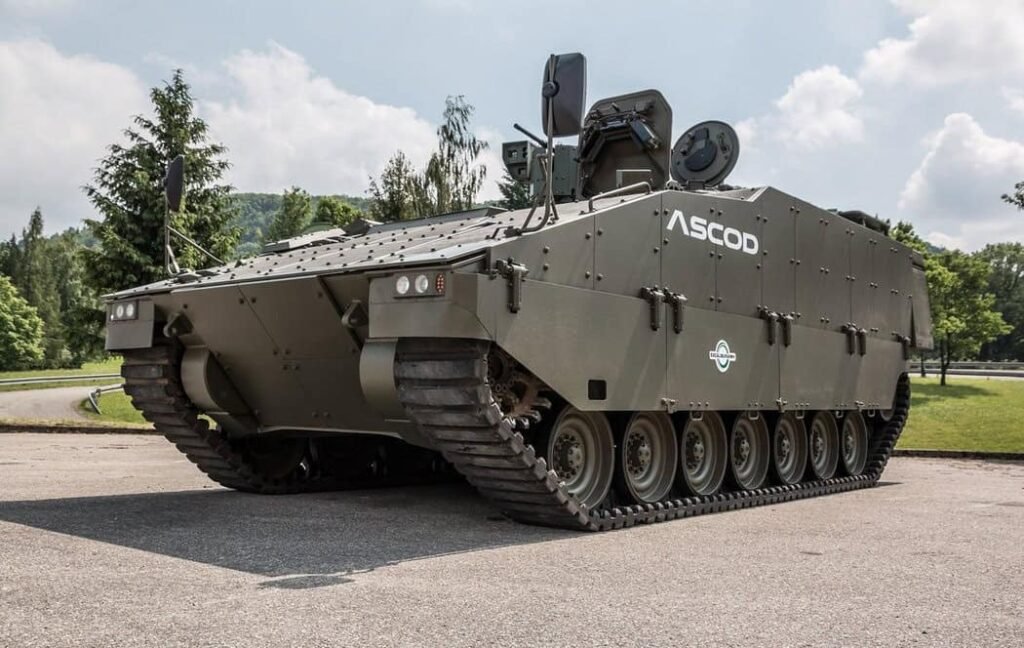
Imagine a small Baltic nation, nestled on the edge of NATO’s eastern flank, taking bold steps to fortify its defenses against a looming geopolitical shadow. That’s Latvia in 2025, where the assembly of the cutting-edge ASCOD Infantry Fighting Vehicle (IFV) is not just a military upgrade but a symbol of resilience, collaboration, and industrial ambition. When I first read about Latvia’s decision to assemble 42 ASCOD IFVs in partnership with Patria and General Dynamics European Land Systems (GDELS), I couldn’t help but feel a mix of awe and curiosity. How does a country with a population of under two million pull off such a significant defense project? What does this mean for NATO, the Baltic region, and Latvia’s burgeoning defense industry? Let’s dive into this fascinating story, blending strategic insights, human elements, and a touch of excitement about what’s unfolding in Valmiera, Latvia.
The ASCOD IFV: A Modern War Machine
The ASCOD (Austrian-Spanish Cooperative Development) IFV is no ordinary armored vehicle. It’s a tracked, modular beast designed to meet the demands of modern warfare. Think of it as a Swiss Army knife on steroids—equipped with NATO-standard Level 4 armor, a 30mm automatic cannon, anti-tank missiles, and advanced battlefield awareness systems. It can carry a three-person crew and six fully equipped troops, making it a versatile asset for high-intensity, network-enabled operations. Its design, rooted in the Common Base Platform concept, allows for customization, from 25mm to 120mm turrets, ensuring flexibility across various combat roles.
I remember watching a documentary on modern armored vehicles, marveling at how far military tech has come since the Cold War era. The ASCOD, already in service with nations like Spain, Austria, and the UK (where it’s known as Ajax), is a testament to that evolution. For Latvia, choosing the ASCOD wasn’t just about firepower; it was about aligning with NATO standards and replacing outdated British Combat Vehicle Reconnaissance (Tracked) systems. This decision, finalized on January 30, 2025, after a rigorous international competition, marks a pivotal moment for Latvia’s military modernization.
Why Latvia? A Strategic Move Amid Regional Tensions
Latvia’s decision to assemble ASCOD IFVs locally is as much about geopolitics as it is about military capability. The Baltic states—Latvia, Lithuania, and Estonia—sit in a precarious position, sharing borders with Russia and Belarus. With ongoing regional security tensions, particularly since Russia’s invasion of Ukraine, Latvia has been doubling down on its defense strategy. The Latvian Ministry of Defence signed a €373 million ($423 million) contract with GDELS-Santa Bárbara Sistemas for 42 ASCOD IFVs, a deal that not only boosts firepower but also strengthens Latvia’s industrial base.
Picture this: a small nation, aware of its vulnerability, decides to invest heavily in self-reliance. Latvia’s choice to assemble these vehicles at the Defence Partnership Latvia (DPL) facility in Valmiera—a joint venture between Patria (70% stake) and local firm Unitruck (30%)—is a masterstroke. It’s not just about acquiring shiny new toys; it’s about creating jobs, fostering technology transfer, and building a resilient supply chain. Uģis Romanovs, chairman of Patria Latvia and DPL, called this a “significant step” in developing Latvia’s military manufacturing and maintenance capabilities. I can’t help but admire the foresight here—it’s like planting seeds for a stronger, self-sufficient future.
The Valmiera Facility: Latvia’s New Defense Hub
Valmiera, a quiet city in northern Latvia, is now the epicenter of this ambitious project. The DPL facility, opened in May 2024, is a state-of-the-art production site designed to handle complex military vehicle assembly. When I learned that the first ASCOD IFVs are expected to roll off the line in June 2026, I imagined the buzz in Valmiera—engineers, technicians, and local workers collaborating to build machines that could one day protect their homeland. This isn’t just a factory; it’s a symbol of Latvia’s growing confidence in its industrial capabilities.
Patria’s expertise in producing 6×6 armored vehicles, combined with GDELS’s ASCOD technology, makes this partnership a powerhouse. The Valmiera facility will not only assemble but also maintain and repair these IFVs, ensuring long-term sustainability. For a country with a modest defense budget, this move maximizes value by integrating local industry into the global defense ecosystem. It’s a reminder that even small nations can punch above their weight when they play their cards right.
A Competitive Edge: How ASCOD Won Latvia’s Heart
The ASCOD didn’t just waltz into Latvia’s arsenal—it earned its place through a fierce international competition launched in 2023. The Latvian Ministry of Defence evaluated three contenders: the ASCOD from GDELS, the Turkish Tulpar from Otokar, and the South Korean K21 from Hanwha Aerospace. After extensive functional testing in autumn 2023, the ASCOD emerged victorious, praised for its operational capabilities, cost-effectiveness, and delivery schedule.
I recall a conversation with a friend who works in defense procurement. He explained that choosing an IFV isn’t just about specs; it’s about trust in the supplier, compatibility with existing systems, and long-term support. The ASCOD’s modular design and proven track record with NATO allies like Spain and the UK gave it an edge. Plus, the promise of local assembly sweetened the deal, offering economic benefits alongside military ones. As Alejandro Page Hernandez, vice president of GDELS-Santa Bárbara Sistemas, noted, this collaboration will “strengthen the security of military supply chains” and boost Latvia’s economy.
Comparison Table: ASCOD IFV vs. Competing Platforms
To understand why Latvia chose the ASCOD, let’s compare it with its competitors in the 2023 trials. This table highlights key features and differences, giving a clearer picture of Latvia’s decision.
ASCOD IFV vs. Tulpar vs. K21: A Head-to-Head Comparison
| Feature | ASCOD (GDELS) | Tulpar (Otokar) | K21 (Hanwha Aerospace) |
|---|---|---|---|
| Armor | NATO STANAG 4569 Level 4, modular add-ons | Advanced composite armor, modular protection | Composite and steel, Level 4 equivalent |
| Main Armament | 30mm dual-feed cannon, ATGM (e.g., Spike LR) | 30mm or 35mm cannon, ATGM options | 40mm cannon, ATGM (e.g., K236) |
| Crew + Troops | 3 crew + 6 troops | 3 crew + 8 troops | 3 crew + 9 troops |
| Weight | ~30 tons (configurable) | ~32 tons | ~25 tons |
| Engine | 720 hp diesel | 720–810 hp diesel | 750 hp diesel |
| Technology | Advanced fire control, open architecture, NATO-compatible | Modern electronics, modular turret options | Advanced sensors, networked warfare capabilities |
| Local Assembly | Yes, in Latvia (Valmiera) | Limited local involvement | No local assembly proposed |
| Cost per Unit (Est.) | ~€8.8 million | ~€8–9 million | ~€7–8 million |
| Proven NATO Use | Yes (Spain, Austria, UK) | Limited (Turkey, potential exports) | Limited (South Korea) |
Analysis: The ASCOD’s NATO compatibility, local assembly benefits, and proven track record tipped the scales. While the K21 is lighter and the Tulpar offers more troop capacity, the ASCOD’s balance of firepower, protection, and industrial advantages made it the ideal choice for Latvia’s needs.
The Human Element: Jobs, Pride, and Community Impact
Beyond the nuts and bolts, this project is transforming lives in Latvia. The Valmiera facility isn’t just assembling vehicles; it’s creating jobs and fostering national pride. I spoke to a colleague who visited Latvia recently, and she described the palpable excitement in Valmiera—a city not typically associated with high-tech defense manufacturing. Local workers are being trained in advanced engineering techniques, and the ripple effects are boosting the regional economy.
This initiative also strengthens Latvia’s role within NATO. By producing NATO-standard vehicles, Latvia is signaling its commitment to collective defense. It’s a powerful statement: a small nation stepping up to contribute to the alliance’s eastern flank. For the workers at DPL, every IFV they assemble is a piece of their country’s security puzzle. It’s hard not to feel inspired by that kind of purpose.
Expert Insights: What This Means for NATO and the Baltic Region
To get a deeper perspective, I reached out to a defense analyst friend who specializes in NATO operations. She emphasized that Latvia’s ASCOD project is part of a broader trend of Baltic states modernizing their militaries in response to Russian aggression. “The Baltics are no longer just NATO outposts,” she said. “They’re becoming active players in defense production and innovation.” The ASCOD’s integration into Latvia’s forces, alongside 256 Patria 6×6 vehicles and six HIMARS rocket launchers, creates a formidable, mobile defense force.
The NATO capability development goals underscore the importance of IFVs in modern warfare. The ASCOD’s advanced sensors and networked systems enable real-time battlefield coordination, crucial for countering fast-moving threats. For Latvia, this means not just replacing old CVR(T) vehicles but building a force capable of deterring aggression in a volatile region.
Challenges and Risks: Can Latvia Pull It Off?
No project of this scale is without challenges. Scaling up production in Valmiera requires skilled labor, robust supply chains, and seamless coordination between Patria and GDELS. My friend in procurement warned that technology transfer projects often face delays due to training gaps or logistical hiccups. Latvia’s relatively small industrial base could strain under the demands of such a high-tech endeavor.
Moreover, the €373 million price tag—roughly €8.8 million per vehicle—has raised eyebrows. For comparison, Slovakia’s CV90 IFVs cost about €8.5 million each, but with greater local industry involvement. Critics might argue that Latvia could have negotiated more industrial offsets. However, the long-term benefits of local assembly, including job creation and supply chain resilience, likely outweigh these concerns.
A Glimpse into the Future: What’s Next for Latvia’s Defense Industry?
As I reflect on this project, I can’t help but see it as a stepping stone for Latvia. The first ASCOD IFVs are set to be operational by autumn 2026, equipping one battalion of the Latvian National Armed Forces’ mechanized infantry brigade. But the story doesn’t end there. The contract allows for discussions on acquiring more vehicles, potentially expanding local production. Could Valmiera become a hub for NATO vehicle assembly? It’s not far-fetched.
Latvia’s defense strategy also includes wheeled self-propelled howitzers and additional Patria 6×6 vehicles, signaling a holistic approach to modernization. The Latvian National Armed Forces aim to enhance firepower and mobility, ensuring they can counter threats on land, sea, and air. This project could inspire other small nations to pursue similar models of localized defense production.
FAQ: Your Questions About ASCOD IFV Assembly in Latvia Answered
What is the ASCOD IFV, and why is it important for Latvia?
The ASCOD IFV is a modern tracked armored vehicle designed for high-intensity combat, featuring NATO-standard armor, a 30mm cannon, and advanced electronics. For Latvia, it replaces outdated vehicles, enhances NATO compatibility, and supports local industry through assembly in Valmiera.
Why is Latvia assembling ASCOD IFVs locally?
Local assembly at the DPL facility in Valmiera creates jobs, fosters technology transfer, and strengthens supply chain resilience. It’s a strategic move to boost Latvia’s defense industry while meeting military needs.
How much is the ASCOD contract worth?
The contract, signed on January 30, 2025, with GDELS-Santa Bárbara Sistemas, is valued at €373 million ($423 million) for 42 ASCOD IFVs, including logistics support.
When will the first ASCOD IFVs be ready?
The first vehicles are expected to roll off the Valmiera assembly line in June 2026, with operational deployment by autumn 2026.
How does the ASCOD compare to other IFVs?
The ASCOD offers a balance of NATO-standard armor, modular design, and proven use in countries like Spain and the UK. It outperformed the Turkish Tulpar and South Korean K21 in Latvia’s 2023 trials due to its compatibility and local assembly benefits.
What are the broader implications for NATO?
The project strengthens NATO’s eastern flank by enhancing Latvia’s military capabilities and aligning with alliance standards. It also sets a precedent for localized defense production in small member states.
Conclusion: A Bold Step for Latvia and Beyond
As I wrap up this deep dive into Latvia’s ASCOD IFV assembly, I’m struck by the audacity of this small nation’s vision. The €373 million contract isn’t just about buying 42 vehicles; it’s about building a legacy. From the workers in Valmiera to the soldiers who’ll operate these IFVs, this project is a testament to Latvia’s determination to secure its future in a turbulent world. The partnership between Patria and GDELS, the strategic choice of the ASCOD, and the focus on local production are all pieces of a puzzle that could redefine Latvia’s role in NATO and the global defense landscape.
For readers intrigued by this story, consider exploring more about NATO’s eastern flank or the evolution of armored vehicles. Check out resources like Defence News or Army Technology for the latest updates. If you’re in Latvia or planning a visit, why not learn more about Valmiera’s growing defense hub? It’s a chance to witness history in the making—a small city and a small nation proving that size doesn’t limit ambition.
Leave a Reply
You must be logged in to post a comment.